The History of Beach Hats: From Function to Fashion and Back Again
The beach hat's history is, in miniature, the history of how humans have negotiated their relationship with the sun. Before sun protection was a medical concept, it was a class marker — wide-brim hats were worn by working people who needed to stay in the sun, while fashionable society sought indoor settings that kept skin pale. Then beach culture inverted everything, and staying in the sun became desirable. Now, as UV science has clarified the real cost of sun exposure, the beach hat has come full circle: back to function, but with more style options than any previous era.
The Pre-Beach Era: Hats as UV Protection by Necessity | The Panama Hat's Origin Story | The Resort Era and the Style Shift | American Beach Culture and the Hat | The Sunscreen Era's Impact | The 2026 Convergence | FAQ
Before the Beach: Hats as Practical UV Protection
Before beach culture existed as a recreational concept — roughly before the late 19th century — wide-brim hats were work equipment. Agricultural workers, sailors, and outdoor laborers in equatorial and subtropical regions had independently developed wide-brim head coverings across cultures: the sombrero in Central America, the various woven-palm hats of Southeast Asia and Polynesia, the broad-brim felt hats of European country workers.
These hats had nothing to do with fashion. They were tools for making outdoor labor survivable — reducing facial and neck exposure during work that sometimes stretched 10–12 hours in direct sun. The toquilla palm straw hat of Ecuador (the future "Panama hat") was worn by workers and farmers throughout the Andes and coastal lowlands long before European contact documented it.
The Panama Hat: A Name That Came From Somewhere Else
The most enduring beach hat style has a name that misdirects its origin. The "Panama hat" is from Ecuador, not Panama — made from the toquilla palm (Carludovica palmata) by artisans in Cuenca and Montecristi. The Ecuador-to-Panama connection came through trade: Ecuadorian hats were shipped through Panama's Pacific ports and became associated with that transit point in the 19th century.
The hat's international fame was sealed by an unlikely ambassador: US President Theodore Roosevelt, photographed wearing one during his 1906 visit to the Panama Canal construction site. The image — the most powerful man in America wearing the regional hat of the workers he was overseeing — made the Panama hat simultaneously presidential and accessible. It has never fully left.
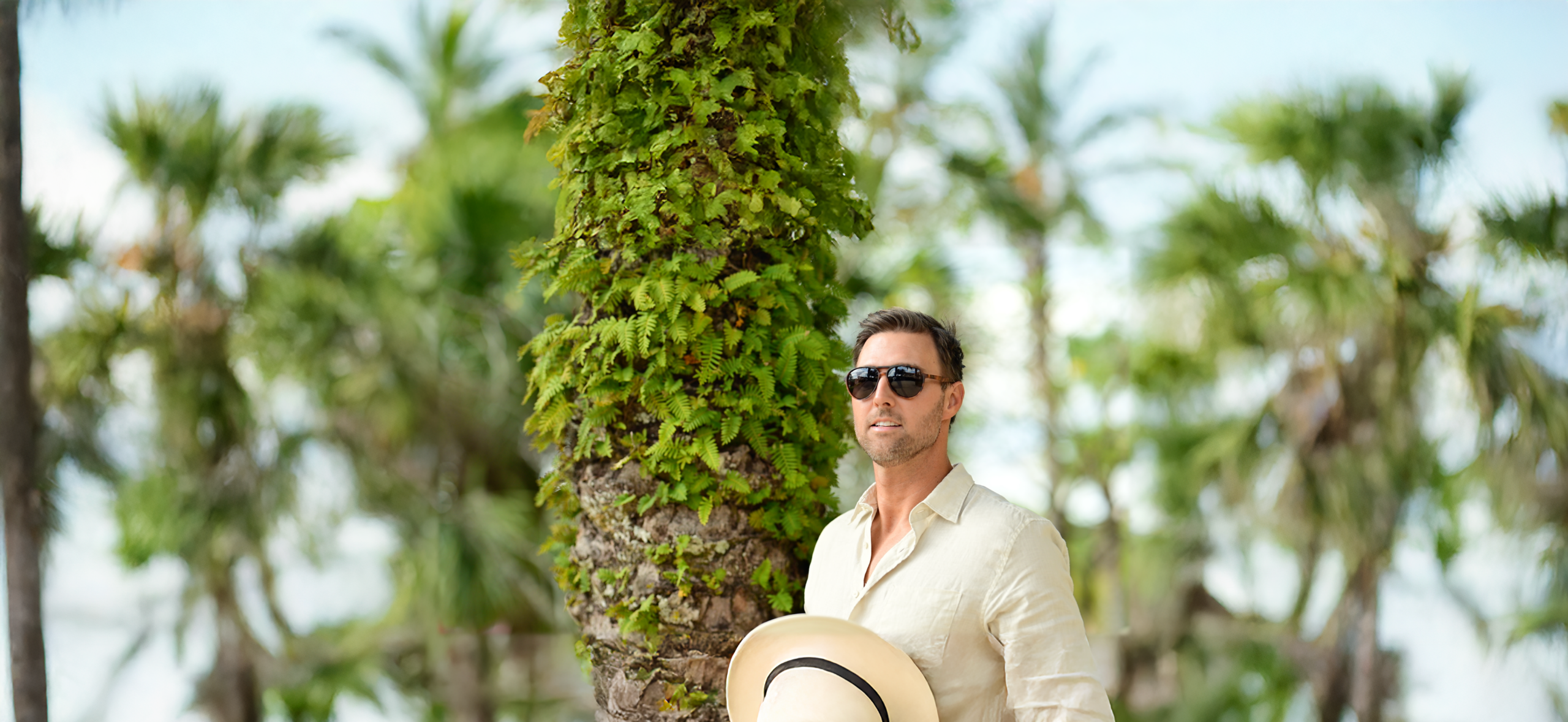
Panama Jack's classic Panama hat collection maintains the essential geometry of the original toquilla construction: center-creased crown, upswept brim, natural straw in the 3–3.5 inch width that provides meaningful UV coverage while maintaining the proportions that make the hat recognizable. A direct line from the Ecuadorian artisan tradition to the 2026 beach.
Panama Jack Classic Panama Hat — the heritage style, beach-formulated. Available on Amazon.
The Resort Era and the Style Hat
The late 19th and early 20th centuries produced the first "beach resort" as a cultural institution — and with it, the concept of beach fashion distinct from beach function. European and American aristocracy discovered the seaside as a leisure destination, and beach dress codes emerged accordingly.
In this era, the beach hat became a style object rather than a work tool. The wide brim was maintained, but the materials became finer — lightweight toquilla straw for the Panama style, woven seagrass for resort fashions, raffia for the more casual versions. The function was still there, but the primary register became social.
American Beach Culture and the Hat
The post-World War II era democratized beach culture in America. Florida, California, and the Gulf Coast became accessible to the middle class for the first time, and beach culture expanded from resort leisure to mass recreation. It was in this era — specifically the early 1970s — that Panama Jack was founded, with the sun-weathered beach dweller as the brand archetype.
The 2026 Beach Hat: Where It Stands
| Hat Style | Origins | UV Coverage | 2026 Position |
|---|---|---|---|
| Classic Panama Hat | Ecuador, 1800s | 3–3.5 inch brim | Heritage + mainstream; most versatile |
| Straw Fedora | European fashion, 1880s+ | 2.5–3.5 inch brim | Style-forward; beach to city |
| Wide-Brim Straw | Agricultural work hats | 3.5–5 inch brim | Maximum coverage; fully mainstream in 2026 |
| Boonie Hat | Military field gear, 1960s | 3–4 inch brim; 360° | Active outdoor; functional benchmark |
| Bucket Hat | Military surplus, 1940s+ | 2.5–3 inch brim; 360° | Casual; streetwear-derived 2026 moment |
Panama Jack's complete hat collection — every style from the classic Panama to the wide-brim safari. Available on Amazon.
Frequently Asked Questions
Where was the Panama hat actually invented?
Ecuador — specifically the Manabí region, with artisan centers in Cuenca and Montecristi. The toquilla palm straw (Carludovica palmata) is native to coastal Ecuador. The hat became known as "Panama" because it was traded through Panama in the 19th century and associated with that transit point, particularly after Theodore Roosevelt's famous 1906 photograph.
Why do beach hats have wide brims?
The wide brim's primary function is UV shading — providing shade to the face, ears, and neck from overhead and angled sun. The width (3–4+ inches for genuine protection) creates meaningful geometric shade to the most UV-exposed facial areas. This function predates modern sunscreen by centuries; it was understood practically before it was understood scientifically.
What is the best beach hat style for 2026?
The classic Panama hat and wide-brim straw hat are the two most broadly recommended beach hat styles — both provide meaningful UV coverage (3–3.5+ inch brims) in materials appropriate for beach settings. For active beach use with water entry, the boonie hat with chin cord provides 360° coverage and wind stability that straw hats can't match.
- Best Panama Hats on Amazon 2026: A Complete Buyer's Guide
- Best Men's Sun Hats 2026: Protection, Style, and Comfort Ranked
- The Brand Born at the Beach: Panama Jack's 50-Year Heritage Story